Curtain, Drape & Valance Size Guide
Getting the right curtain size makes all the difference between a polished, intentional look and one that feels off. This guide walks you through how to measure your windows, choose the right curtain length and width, and understand standard sizes for curtains, drapes, and valances.
How to Measure Your Windows for Curtains
Before purchasing any window treatment, take three measurements:
- Rod width: Measure the width of your curtain rod from end to end (not the window frame). This is the total span your curtains need to cover.
- Drop / length: Measure from the top of the curtain rod down to where you want the curtains to end (sill, floor, or puddle).
- Window width: Measure the window frame itself — useful for calculating how far beyond the frame to extend the rod.
Pro tip: Mount your rod 4–6 inches above the window frame (or higher, up to the ceiling) and extend it 4–6 inches beyond the frame on each side. This makes windows appear larger and lets more light in when curtains are open.
Standard Curtain Lengths
Curtains are sold in standard drop lengths. Choose based on your rod height and the look you want:
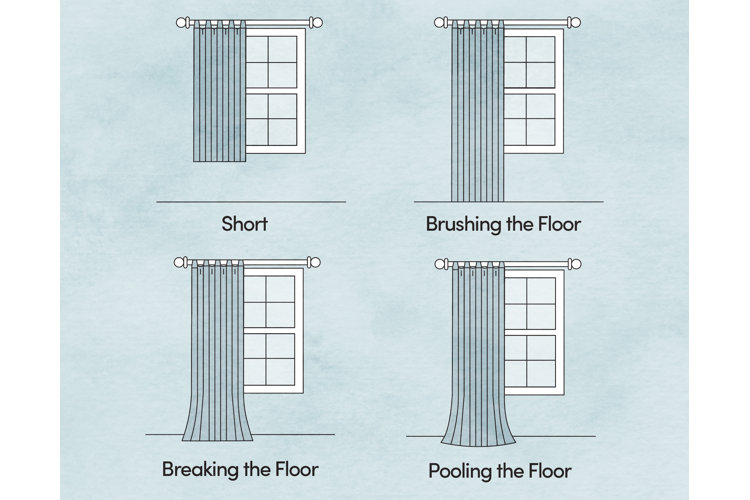
- 63 inches: Sill length — ends at or just below the windowsill. Casual and practical; ideal for kitchens, bathrooms, and children’s rooms.
- 84 inches: The most common length. Works well for standard 8-foot ceilings when the rod is mounted just above the window frame.
- 95–96 inches: A versatile mid-length for rooms with higher ceilings or rods mounted closer to the ceiling.
- 108 inches: Floor-length for 9-foot ceilings with the rod mounted near the ceiling. Creates an elegant, room-elongating effect.
- 120 inches: For very high ceilings or a dramatic puddle effect on the floor.
Floor-length curtains (just grazing the floor) are the most popular choice for living rooms and bedrooms — they look polished and intentional. For a puddle effect, add 3–6 extra inches.
Standard Curtain Widths and Fullness
Curtain panels are typically sold in widths of 42–54 inches per panel. For a full, gathered look, your total curtain width should be 1.5–3x the width of your rod:
- 1.5x rod width: Minimal fullness — a sleek, modern look when closed. Works well with grommet or tab-top panels.
- 2x rod width: Standard fullness — the most common choice. Looks full when closed and neat when open.
- 2.5–3x rod width: Luxurious fullness — a lush, dramatic drape. Best for formal rooms or pinch-pleat panels.
Example: For a 60-inch wide rod, you’d want 90–120 inches of total curtain width — typically two panels of 48–54 inches each.
Valance Sizes
Valances are short decorative panels that cover the top of the window and rod. They are typically used alone for a light, decorative touch, or layered over curtains or blinds.
- Standard valance length: 12–18 inches drop. A good rule of thumb is that the valance should cover no more than one-third of the window height.
- Valance width: Like curtains, valances should be 1.5–2x the rod width for adequate fullness.
- Rod pocket valances: The most common style — simply slide onto the rod. Available in most standard widths.
- Box pleat valances: A more structured, tailored look. Measure carefully as pleating reduces the finished width.
Curtain Heading Styles and How They Affect Sizing
The heading style affects how much fabric you need and how the curtain hangs:
- Grommet / eyelet: Metal rings along the top slide directly onto the rod. Clean, modern look. Panels hang in even, uniform folds. Standard fullness (1.5–2x) works well.
- Rod pocket: A sewn channel at the top slides over the rod. Classic, gathered look. Requires 2–2.5x fullness for best appearance.
- Tab top: Fabric loops attach to the rod. Casual and relaxed. Works at 1.5–2x fullness.
- Pinch pleat: Pre-sewn pleats create a formal, tailored look. Requires the most fabric — 2.5–3x fullness. Typically used with curtain hooks and rings.
- Back tab / hidden tab: Loops are hidden behind the panel for a clean front. Similar fullness to rod pocket.
Our Linen Texture Grommet Top Drapes are a versatile, easy-to-hang option that works beautifully in modern and transitional interiors. For a sheer, airy look, explore our Extra Wide Sheer Voile Curtains.
Frequently Asked Questions
Q: What curtain length should I choose for an 8-foot ceiling?
A: For a standard 8-foot ceiling with the rod mounted 4–6 inches above the window frame, 84-inch curtains are the most common choice. If you mount the rod closer to the ceiling, 95–96 inches will give you a floor-length look.
Q: How many curtain panels do I need?
A: Most windows use two panels (one on each side). For a 60-inch rod with standard fullness (2x), you’d need 120 inches of total curtain width — two 54-inch panels or two 60-inch panels work well. For a single window with a narrow rod, one panel may suffice for a casual look.
Q: Should curtains touch the floor?
A: For living rooms and bedrooms, yes — floor-length curtains look the most polished. For kitchens, bathrooms, or children’s rooms, sill or apron length is more practical and easier to keep clean.
Shop Curtains & Window Treatments at Anna’s Linens
Ready to find the perfect window treatment? Browse our full Home Decor Collections — featuring linen drapes, sheer panels, room-darkening curtains, and more in a range of lengths and styles to suit every room.